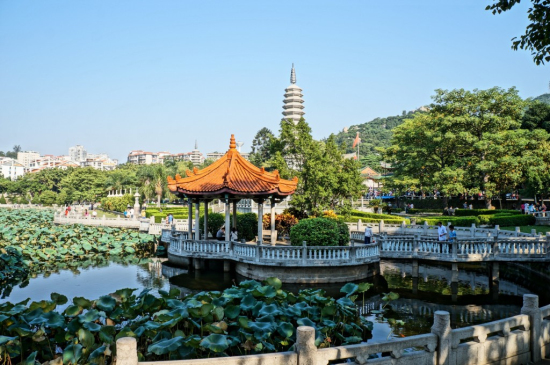
South Putuo Temple
Introduction
South Putuo Temple is a renowned Buddhist temple located at the foot of Wulao Peak in Xiamen, Fujian province, China. It is one of the most frequently visited Buddhist shrines in the region, attracting both devotees and tourists. The temple is celebrated for its serene environment, historical significance, and architectural beauty. Known for its rich history that spans over a millennium, South Putuo Temple is a testament to the enduring influence of Buddhism in China. It is also noted for its invaluable collection of Buddhist artifacts and scriptures, making it a significant cultural and religious site.
History
The origin of South Putuo Temple dates back to the Tang Dynasty (618-907), marking its establishment as a spiritual hub for Buddhist worship. Throughout its history, the temple has undergone various restorations and expansions, reflecting the changing architectural styles and religious practices over the centuries. During the Ming Dynasty (1368-1644), particularly in the Wanli Reign (1573-1619), the temple gained prominence due to the addition of treasured religious artifacts, including a scripture reportedly written in blood.
Architecture
The architectural design of South Putuo Temple is a harmonious blend of traditional Chinese styles and Buddhist elements. The complex is composed of several halls, each serving a distinct purpose in the religious activities conducted at the temple. Among these, the Hall of Heavenly Kings, the Main Hall, and the Great Compassion Hall are notable. The temple is adorned with intricate carvings, statues, and paintings that depict various Buddhist deities and stories. One of the most remarkable features is the statue of the Goddess of Mercy with 1,000 hands, a masterpiece of craftsmanship. The Sutra Room is another significant part of the temple, housing numerous Buddhist relics and scriptures, including the exquisite white ceramic statue of the Goddess of Mercy created by He Chaozong, a renowned ceramic artist from 400 years ago.
Cultural Significance
South Putuo Temple holds immense cultural significance as it embodies the rich heritage and spiritual traditions of Buddhism in China. The temple is not only a place of worship but also a center for cultural exchange and learning. It hosts various religious ceremonies and events that attract participants from across the globe. The presence of the South Fujian Buddhist Academy within the temple grounds underscores its role as an educational institution devoted to the study and practice of Buddhism. The temple's collection of ancient scriptures and artifacts provides valuable insights into the historical and cultural development of Buddhism in the region. As a result, South Putuo Temple serves as a vital link to the past, preserving the spiritual and cultural legacy of Chinese Buddhism for future generations.








